> For the complete documentation index, see [llms.txt](https://help.gopaddle.io/llms.txt). Markdown versions of documentation pages are available by appending `.md` to page URLs; this page is available as [Markdown](https://help.gopaddle.io/overview/runbook-hub/create-runbook-hub.md).
# Create Runbook Hub
### Pre-requisites
* GitHub account registered in gopaddle.
* GitHub repository dedicated for hub configuration.
### Steps to create a Runbook Hub
1. In the gopadle UI, in the left panel, select **Runbook Hubs**
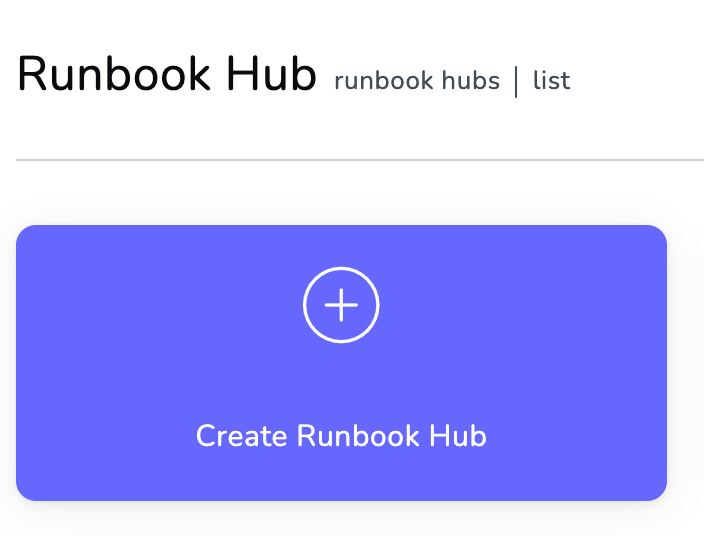
2. Click on **Create Runbook Hub**
Create Runbook Hub
3. In the pop up window, select the registered GitHub Code account and the repository (say **demo-hub**). Provide the hub name, hub description and runbook name, runbook description and the documentation path.
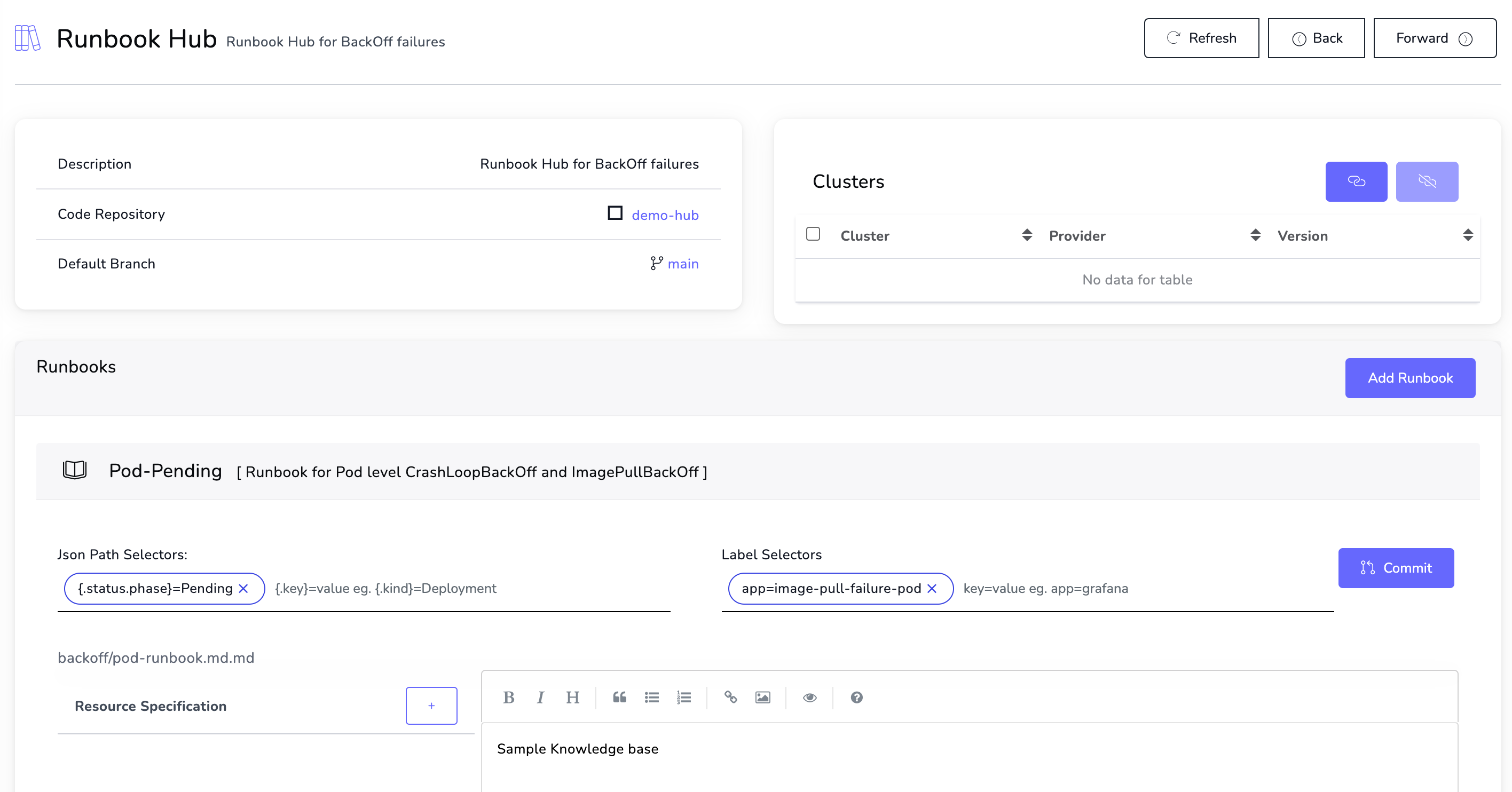
4. Add Knowledge base content and click on **Commit** to commit the changes to the repository. This creates a **.gp.yaml** file, creates a file with **.md** extension in the documentation file path, adds the runbook content and commits the changes to the selected repository.
Runbook Hub Sample Knowledge Base
5. Runbook Hub can now be viewed by clicking on the Runbook Hub name